
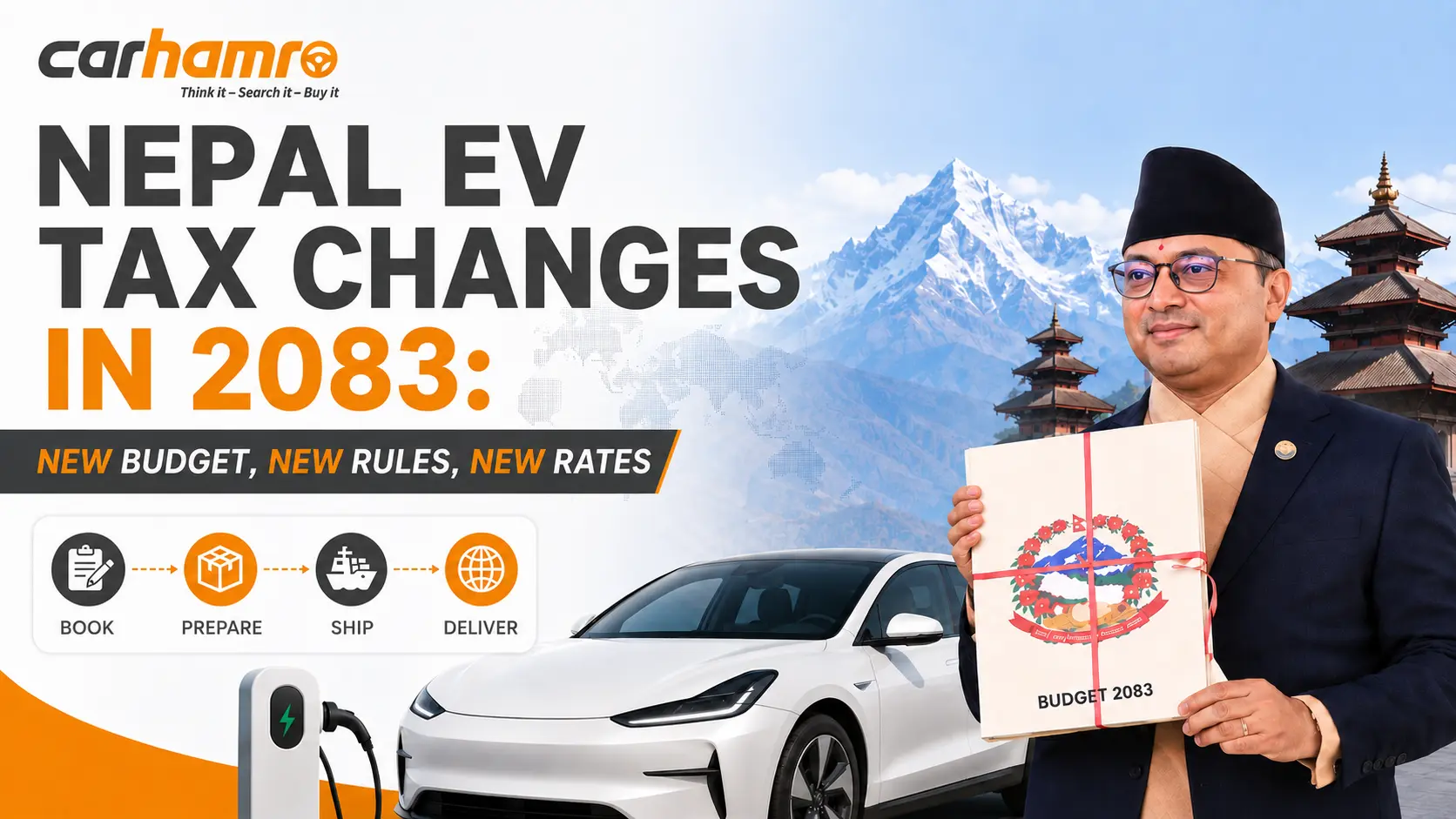
Nepal’s electric vehicle (EV) market is set for a major change after the announcement of the FY 2083/84 budget. The government has introduced a new tax system for EVs, replacing the old motor-power-based structure with a value-based taxation model.
This new policy will affect EV buyers, importers, and dealers across the country. It also aims to support the growth of charging stations, battery management systems, and other EV infrastructure projects.
What Has Changed in Nepal’s EV Tax System?
The biggest change is that EV taxes are no longer based on motor power. Earlier, taxes were calculated according to the vehicle’s peak motor output, such as under 50 kW, 100 kW, or 200 kW categories.
Under the new rules, taxes are based on the vehicle’s CIF value (Cost, Insurance, and Freight). This means the import value of the vehicle now plays the biggest role in determining the total tax.
As a result, two electric vehicles with similar performance may attract different taxes if their import values are different.
New EV Tax Structure for FY 2083/84
The government has introduced the following changes:
- Flat 20% customs duty on EV imports.
- Excise duty on EVs has been removed.
- A new Clean Infrastructure Investment Fee (CIIF) has been introduced.
- VAT and Road Development Tax will continue to apply.
- Tax calculations are now based on vehicle value instead of motor power.
New Tax Rates for Electric Vehicles in Nepal (FY 2083/84)
Under the new Nepal EV Tax Rates 2083/84, taxes are based on the vehicle’s CIF value (Cost, Insurance, and Freight). Lower-priced EVs continue to receive tax benefits, while premium electric vehicles face higher tax rates.
| Vehicle Category / CIF Value | Customs Duty | Clean Infrastructure Investment Fee (CIIF) | VAT | Road Maintenance Fee |
|---|---|---|---|---|
| Up to NPR 20 Lakh | 20% | 2.5% – 5% | 13% | 5% |
| NPR 20 Lakh – 30 Lakh | 20% | 15% | 13% | 5% |
| NPR 30 Lakh – 40 Lakh | 20% | 35% | 13% | 5% |
| NPR 40 Lakh – 50 Lakh | 20% | 70% | 13% | 5% |
| Above NPR 50 Lakh | 20% | 110% – 130% | 13% | 5% |
| Commercial EVs (11+ Seats) | 20% | 2.5% | 13% | 5% |
Key Policy Changes
- Taxes Based on CIF Value: The government now uses the vehicle’s import value to calculate taxes. Motor power is no longer the main factor.
- No More Motor Detuning Benefits: Under the previous system, some vehicles could qualify for lower taxes by staying within specific motor power limits. This advantage has now been removed.
- Excise Duty Removed: The excise duty on electric vehicles has been completely abolished under the new budget.
- New Clean Infrastructure Investment Fee: The newly introduced CIIF replaces the old excise duty system. The fee increases as the vehicle value rises.
- Simplified Green Tax Structure: The government has combined several charges into a more organized and transparent framework.
How Is the New System Different?
The previous tax structure focused mainly on motor power. Buyers could easily estimate taxes based on a vehicle’s kW rating.
The new system focuses on vehicle value. As a result, expensive EVs may face much higher taxes even if they have the same motor power as lower-priced models.
This change makes vehicle pricing more important than ever.
Impact on EV Buyers
For most buyers, the biggest impact will be on vehicle prices.
Budget-friendly and mid-range EVs are expected to remain attractive because they fall into lower tax categories. However, premium EVs may become significantly more expensive due to the higher CIIF rates.
Before buying an EV, customers should ask for a detailed price breakdown that includes:
- Customs duty
- CIIF charges
- VAT
- Road Development Tax
- Registration fees
- Other government charges
Impact on Dealers and Importers
The new tax system makes cost planning more important for importers and dealers.
Before importing a vehicle, businesses should carefully evaluate:
- CIF value
- Applicable tax category
- Total landed cost
- Market demand
- Expected selling price
Since taxes are now linked to vehicle value, a proper pricing strategy will be essential for staying competitive.
Government Focus on EV Infrastructure
The 2083/84 budget also supports the development of EV infrastructure across Nepal.
To encourage investment, the government has announced:
- Only 1% customs duty on machinery used for EV charging station production and assembly.
- Five-year income tax exemption for charging station industries.
These measures are expected to help expand charging networks and support long-term EV growth in Nepal.
Important Things to Check Before Buying or Importing an EV
Before making a purchase or import decision, it is important to verify:
- Vehicle CIF value
- Customs duty calculation
- Applicable CIIF rate
- VAT amount
- Road Development Tax
- Registration requirements
- Total landed cost
Understanding these costs can help avoid unexpected expenses later.
Conclusion
The Nepal EV Tax Changes in 2083/84 bring a major change to how electric vehicles are taxed in Nepal. The government has moved from a motor-power-based system to a vehicle value-based tax structure.
Under the new rules, affordable EVs are expected to remain attractive for buyers, while premium and luxury EVs may become more expensive due to higher tax rates. Buyers should always check the complete vehicle cost, including taxes and fees, before making a purchase.
For importers and dealers, careful cost calculation and pricing planning will be important under the new system. As Nepal continues to support electric mobility, these changes are expected to help improve EV infrastructure and encourage long-term growth of the EV market.
At CarHamro, we recommend comparing EV prices, tax rates, and total ownership costs before buying a vehicle. Understanding the new tax structure will help buyers make smarter decisions and avoid unexpected costs in the future.




Comments (0)
No comments yet. Be the first to comment.